

There’s something about Thanksgiving that makes the entire house feel a little busier than usual.
The oven is running all morning, relatives are arriving, someone is looking for an extra chair, and the dog has been following the turkey around since breakfast.
Meanwhile, your cat may be wondering why everyone is making such a fuss over a bird they aren’t allowed to touch.
If you’re hosting Thanksgiving in Tempe, your pets are probably going to be right in the middle of the action.
At Tempe Lake Veterinary Clinic & Pet Resort, we love seeing pets included in family traditions. But with so many foods, visitors, and distractions, Thanksgiving can also introduce some unexpected health risks.
The good news? A few simple adjustments can help your dog or cat enjoy the holiday safely.
Before Guests Arrive: Give Your Pet a Plan
We spend plenty of time planning Thanksgiving dinner, but our pets could use a little preparation, too.
Start by deciding where your pet will spend the busiest parts of the day.
Some dogs love greeting visitors, while others become overwhelmed by noise and activity. Cats may prefer a quiet bedroom away from unfamiliar people.
Make sure your pet has access to fresh water, their regular food, and a comfortable place to rest.
If your dog is known for counter-surfing or begging, consider giving them a food puzzle or enrichment toy while you’re cooking.
A little planning can prevent them from discovering the wrong ingredients.
During Meal Preparation: Watch the Ingredients
Some of the most dangerous Thanksgiving foods are ingredients that haven’t even made it into the oven yet.
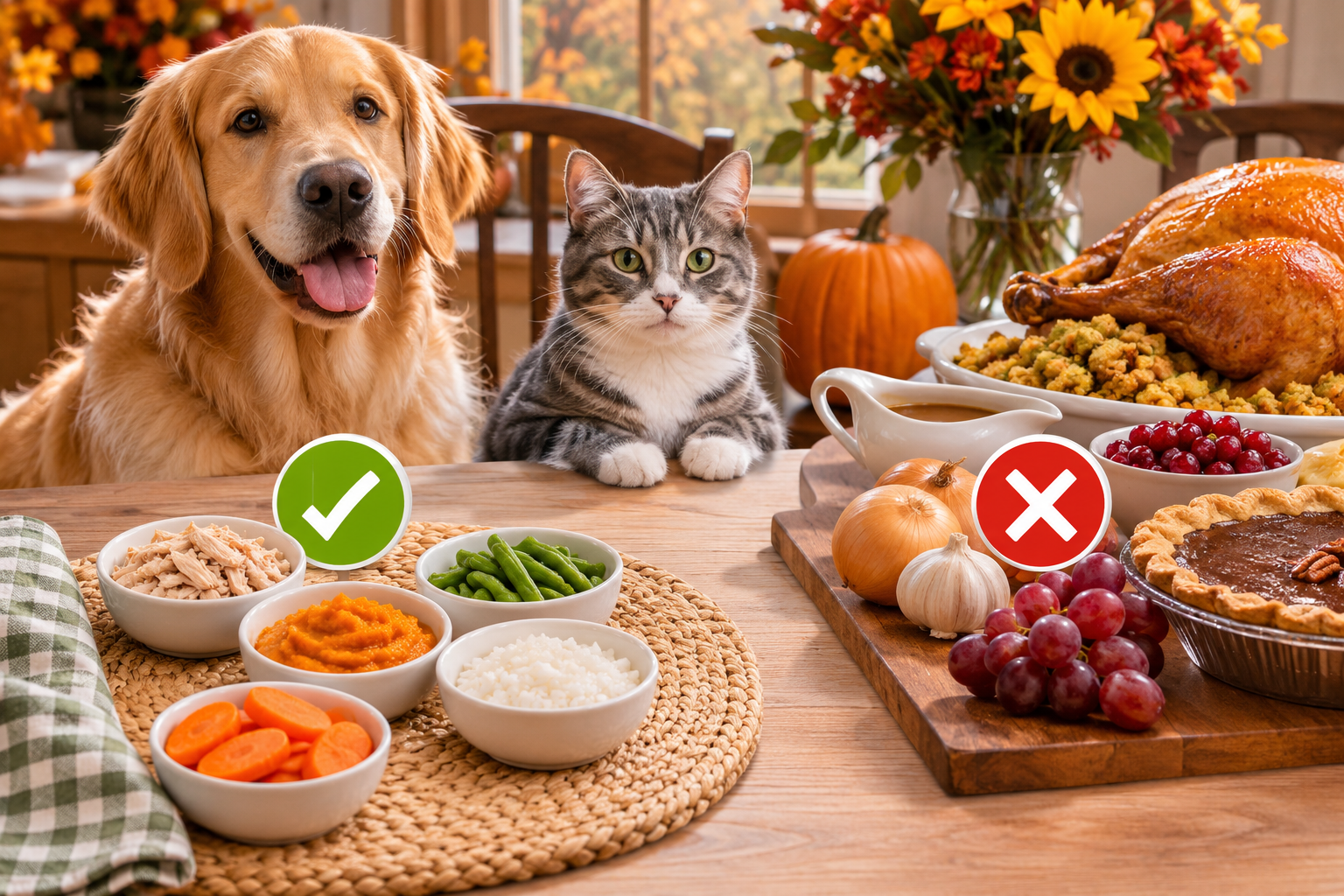
Onions and garlic are commonly used in stuffing, gravy, and casseroles. Both can damage red blood cells in dogs and cats, potentially causing anemia.
Grapes and raisins may appear in salads, breads, and desserts. These can cause acute kidney injury in dogs, even after relatively small exposures.
Unbaked yeast dough can expand inside a pet’s stomach and produce alcohol as it ferments.
Chocolate contains theobromine and caffeine, which can affect the heart and nervous system.
Xylitol, a sweetener found in some sugar-free products, can cause dangerously low blood sugar and liver injury in dogs.
Keep these ingredients out of reach while preparing your meal, and clean up spills promptly.
At the Dinner Table: Which Foods Can Pets Actually Eat?
Not everything on the Thanksgiving table is off-limits.
The important distinction is how the food was prepared.
| Food | Can Pets Have It? |
|---|---|
| Plain cooked turkey | Yes, small boneless, skinless, unseasoned portions |
| Turkey skin | Avoid because of the high fat content |
| Cooked turkey bones | No, they can splinter or cause blockages |
| Plain green beans | Generally safe in small portions |
| Green bean casserole | Avoid because of rich sauces and possible onions |
| Plain cooked sweet potato | Generally safe in moderation |
| Sweet potato casserole | Avoid sugary, buttery toppings |
| Stuffing | Avoid, particularly with onions or garlic |
| Chocolate desserts | Toxic to pets |
| Gravy | Avoid due to fat, salt, and seasonings |
For cats, plain cooked turkey is usually a more appropriate holiday treat than vegetables.
Remember that even safe foods should be offered in small portions.
Why Your Pet Doesn’t Need a Full Thanksgiving Plate
A Thanksgiving plate may look perfectly reasonable to us, but it can be overwhelming for a pet’s digestive system.
Rich foods contain more fat, salt, and seasoning than dogs and cats typically consume.
A sudden dietary change can cause vomiting or diarrhea.
In some pets, fatty foods can trigger pancreatitis, an inflammatory condition that may require veterinary treatment.
Pets with food allergies, chronic digestive problems, or prescription diets may be especially sensitive.
If you’re unsure whether a particular food is appropriate, it’s safer to stick with your pet’s regular diet.
After Dinner: The Leftover Trap
Once everyone finishes eating, the kitchen can become a pet’s personal treasure hunt.
Turkey bones, greasy pans, dessert plates, and discarded food wrappers may be left within reach.
Dogs may investigate trash cans, while cats may jump onto counters to inspect leftovers.
Cooked bones can splinter or cause gastrointestinal obstructions.
Corn cobs, skewers, and food packaging can also become lodged in the digestive tract if swallowed.
Dispose of food waste in secured containers, refrigerate leftovers promptly, and avoid leaving dirty dishes unattended.
What If a Guest Feeds Your Pet Something Unsafe?
It happens more often than you might think.
A well-meaning relative slips your dog a bite of stuffing or lets your cat taste the gravy.
If you discover that your pet ate something concerning, ask exactly what they were given.
Find out the approximate amount and when they ate it.
Check whether the dish contained onions, garlic, chocolate, raisins, xylitol, or other dangerous ingredients.
Contact your veterinarian for guidance rather than waiting to see if your pet gets sick.
Never induce vomiting or administer home remedies without veterinary instructions.
For suspected poisoning, you can also contact ASPCA Animal Poison Control at (888) 426-4435 or Pet Poison Helpline at (855) 764-7661. Fees may apply.
Symptoms to Watch for During the Holiday
Food-related illness can cause a range of symptoms.
Mild digestive upset may involve occasional vomiting or loose stool, but repeated symptoms can indicate something more serious.
Watch for unusual tiredness, loss of appetite, excessive drooling, abdominal pain, trembling, or weakness.
Difficulty breathing, seizures, collapse, severe abdominal swelling, or repeated unproductive retching require emergency veterinary care.
Known ingestion of potentially toxic foods also warrants prompt professional guidance, even if your pet seems normal.
Make Thanksgiving Special Without Table Scraps
Your pet doesn’t need to eat the same meal as everyone else to enjoy the holiday.
Consider preparing a small portion of plain turkey before seasoning the rest.
You could also offer a favorite veterinarian-approved treat or use a puzzle feeder to keep your pet entertained.
For dogs that enjoy activity, a walk before guests arrive can help burn off some excitement.
Cats may appreciate a quiet space, familiar toys, and an uninterrupted routine.
If you’re traveling or hosting a particularly busy gathering, planning your pet’s care and accommodations ahead of time can help reduce stress.
A Happy Holiday for Tempe’s Pets
Thanksgiving is about enjoying time together, and our pets deserve to be part of those memories.
By choosing appropriate treats, keeping dangerous foods out of reach, and preparing for holiday distractions, you can help make the celebration safer for everyone.
At Tempe Lake Veterinary Clinic & Pet Resort in Tempe, AZ, we’re here to support your pet’s health, wellness, and comfort throughout the year.
If your dog or cat eats something concerning or develops unusual symptoms, contact our veterinary team for guidance. For suspected poisoning or severe symptoms, seek emergency veterinary care immediately.
A little preparation can make Thanksgiving more relaxing for you and much safer for your four-legged family members.